Friday, December 9, 2011

Sales Reps in the Wild: An Interesting Way to Promote a Sales Force Effectiveness Conference

I received this Twitter DM (direct message) from @eyeforpharma: "Thought you might like this. youtu.be/gCDeBAD75Pg"

There was also this @eyeforpharma tweet: "Save pharma sales from extinction. This is serious. http://youtu.be/gCDeBAD75Pg #savepharma #e4p #hcsmeu #hcsm #pharma"

Eyeforpharma (aka "E4P") is a UK company that hosts pharma industry conferences, some of which I am paid to help promote via ads on Pharma Marketing Network and Pharma Marketing Blog. I haven't been paid to write this post, however, nor has E4P asked me to write this post as a favor.

So why am I doing this?

In typical UK parlance, I just think what E4P is doing with YouTube and Twitter to promote its Sales Force Effectiveness Conference (find it on the PMN Calendar here) is "brilliant," by which I mean interesting and funny, almost "snarky" to borrow another UK phrase.

I am reviewing this here because I wonder if pharma companies can use some of the same social media techniques to promote their products or other special interests.

The YouTube video that @eyeforpharma thought I would like is titled "REVEALED: E4P Nature documentary discovers reps in the wild." It's a spoof of how pharma sales reps have been known to pursue physicians to detail them about Rx drugs. It's done in the style of David Attenborough's famous Life on Earth nature shows, portraying sales reps as wild animals seeking their prey.

The description associated with the video tells the story:
Join us as we journey to the edge of civilisation where pharmasuiticus rep can be seen in its natural habitat. In order to prevent the extinction of pharma sales entirely, CLICK HERE: http://bit.ly/prevent-extinction

Only a few dying remnants of this species now remain. The E4P team have managed to capture the last of this species and are urgently recommending immediate action in order to revitalise the remaining population.

Thank you also to our intrepid camera crew at www.stantonmedia.com for their courage in coming into such close contact with these dangerous animals.

If you would like to participate directly in the effort to save pharma sales from total extinction then please email psimms@eyeforpharma.com

Twitter: #savepharma @eyeforpharma
The video ends with the message "Your customers have evolved? Have you?" and a link to the conference site.

The last sequence in the video shows the "alpha rep" eating an iPad, which also emphasizes the "unevolved" nature of many pharma sales reps; reminiscent of the apes gaping at the obelisk in Kubrick's film 2001. Here's a screenshot:


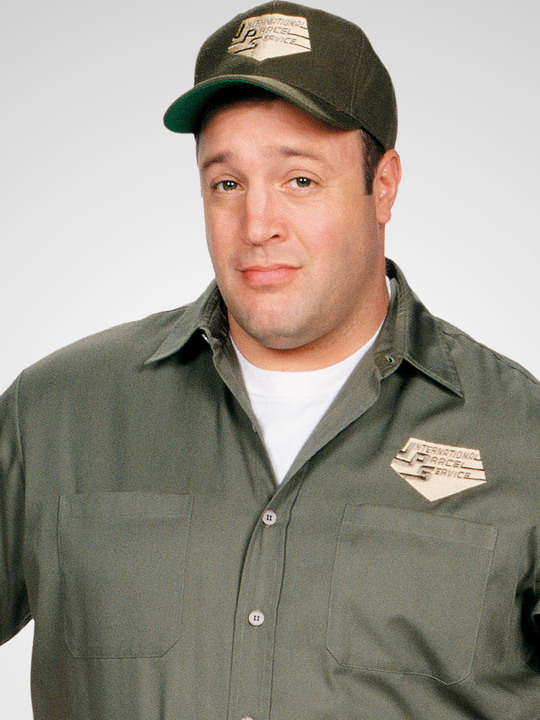
Is it just me or doesn't this guy look like Paul Simms, the co-founder and chairman of E4P? Here's Paul as seen on the @eyeforpharma Twitter page:


A video like this must cost a pretty pence! So, it's frugal to use employees as actors. Unless, of course, the video was paid for by one of the sponsors of the conference. I don't see any sponsorship message though.

But how effective will this video be in promoting the conference and increasing registrations? It's gotten  only 172 views as of this post, but I am sure it will get many more now that I have featured it here!

One last thing. I worry about using Twitter's direct messaging (DM) service to do promotions like this. I know Paul personally and whenever he sends me a DM, I open it. I don't know how many other people Paul has DM'ed about this video or if he used an automated service to send out the same DM to ALL of the followers of @eyeforpharma. But if I start to get bombarded ("blasted") with automated DMs from people I follow on Twitter, I will not be a happy camper. To be clear, E4P has NOT sent me many DMs at all.

I use my @pharmaguy Twitter account to send out promotional messages to followers, but I do NOT send automated promotional DMs in a single "blast" to all my followers. I feel that my followers did not agree to that. I do, however, send out one automated DM to each new follower thanking the person for following me and requesting that they fill out my follower survey (see results of that survey here).

Anyway, kudos to E4P for a fun promotion.

Thursday, December 8, 2011

Lipitor For You! Actually, For Card Carrying Members Only!

"The LIPITOR FOR YOU program comes with the $4 Co-Pay Card so you can save on Lipitor, the medicine that's been helping you lower your cholesterol." So says Pfizer's new direct-to-consumer (DTC) campaign (see ad from the current issue of Newsweek on the right; click to enlarge).

I suspect we'll also be seeing these ads on TV soon. The ad, which features a nice family day at the beach, will put most people in the U.S. in a good mood when the ads run starting in January 2012, just prior to beach season!

The question is, will Pfizer spend as much on Lipitor DTC advertising as it has done in the months prior to Lipitor's loss of patent protection?

I have already noted in a previous post that Lipitor was the #1 most-advertised Rx drug in 2010, a year in which Pfizer spent a whopping $272 million on DTC Lipitor ads (see "Double Dip in DTC Spending Plus 33% Drop in Internet Display Ad Spending!"). This number refers only to "measured media" ad spending and does not include search engine online advertising (but does include, I believe, online display advertising).

But, even Pfizer admits Lipitor revenue will dramatically decrease and it only has 180 days before the real competition starts. Therefore, it must do a whole LOT of DTC advertising in the next 90 days to reap the benefits. Still, I doubt it will spend anywhere near $272 million. My guess would be half of that.

What do you think?

How much will Pfizer spend on Lipitor DTC measured media advertising in 2012?
More than $200 million
Between $100 and $200 million
Less than $100 million
I have no friggin' idea!


December 7, 2011: A Date Which Will Live in Infamy for Women's Health!

"If I close my eyes...I might think I was in the Bush era,” said Michelle Goldberg (@michelleinbklyn), Senior writer for Newsweek/The Daily Beast, and author of Kingdom Coming and The Means of Reproduction. Her remark -- made via Twitter, of course -- was in reference to "Obama's terrible decision to override the FDA on Plan B."

She expressed my feelings precisely!

By now you've all probably heard the news as reported in the NY Times (here): "For the first time ever, the Health and Human Services secretary publicly overruled the Food and Drug Administration, refusing Wednesday to allow emergency contraceptives to be sold over the counter, including to young teenagers. The decision avoided what could have been a bruising political battle over parental control and contraception during a presidential election season."

The action was taken by U.S. Department of Health and Human Services Secretary Kathleen Sebelius in a letter addressed to FDA Commissioner Margaret Hamburg, M.D. Find that letter plus statements by both Sebelius and Hamburg here, where you can also vote on who you think is right.

Sebelius blocked the FDA from allowing the contraceptive pill, called Plan B One-Step, to be made available without a prescription (over-the-counter) to women and girls 16 and younger who now need a prescription to get Plan B. "If taken soon after unprotected sex, the pill halves the chances of a pregnancy," according to the NY Times (op cit).

Who's right? Hambug or Sebelius? Vote here.

Tuesday, December 6, 2011

Be Aware of What's Behind a Pharma Mobile App: Disclaimers Only Tell Part of the Story

Some time ago, I pointed out that certain mobile apps developed by pharmaceutical companies for use by physicians lack adequate disclaimers. Specifically, I was concerned about the software used in these apps that perform calculations to generate data to aid in medical diagnoses. A Psoriasis/PASI app by Janssen Pharmaceutica is an example (see "FDA Promises Still More Guidance! This Time It's Mobile. Janssen's Psoriasis iPhone App May Need It"). I pointed out that this app does NOT include any information about the clinical validity of the PASI calculator nor does it warn the user not to depend on the accuracy of the data.

Today, I found out about AFib Educator 2.0 developed by Sanofi-Aventis (I seemed to have missed 1.0!). The app is intended to be an "interactive way for healthcare providers to illustrate atrial fibrillation and its pharmacologic management for patients and families" (see review on iMedicalApps blog). The "pharmacologic management" is not what you may think; that is, there is no mention of any AFib drug either by trade name or generic name. The app only mentions that "there are treatments available."

Let's look at the disclaimers for these two apps (click the image for an enlarged view):


On the left is the disclaimer for Sanofi's AFib Educator 2.0 and on the right is the disclaimer for Janssen's PAS calculator (updated since I last reviewed the app).

Both disclaimers mention that the app is "not a substitute for medical advice/professional medical care". But only the AFib disclaimer mentions that "Persons using the data within for medical purposes should not rely solely on the accuracy of the data herein." It also mentions that data might be updated periodically -- meaning, I suppose, corrections or more accurate data.

Why doesn't Janssen's Psoriasis/PASI app, which is MUCH more data driven (it calculates a PASI score!), include a similar warning? Obviously, I think it should include that warning.

But more importantly, Janssen's app should include information about the source of the equation it uses to calculate PASI. As I pointed out previously (op cit), there is some difference of medical opinion regarding how PASI should be calculated and which formula should be used by healthcare professionals.

Obviously, ANY healthcare professional can download and use the PASI app. You don't have to be a dermatologist who may be more familiar with PASI calculations than is a general practitioner. In fact, you don't have to be a physician at all! That's fine, but the audience should be made more aware of what's operating "behind" the app to generate the PASI scores.

Be Aware of What's Behind the App
What's going on "behind the app" is a hot topic these days. Recently, major news outlets have reported that there is software running in the background on virtually all smart mobile devices that record every keystroke, supposedly merely to "monitor performance" (see "Is Your Smartphone Tracking Your Keystrokes, Texts and Location?" and the YouTube Video embedded at the end of this post).

It's interesting that part of Janssen's NEW disclaimer HINTS that data are being collected when people use its Psoriasis/PASI app (see screen shot below).


Janssen claims that it is monitoring clicks for performance purposes. However, since it is possible to collect and record ALL keystrokes, there is the possibility that data other than icon clicks are being collected by Janssen. I'll have to see if Trevor Eckhart -- who made the video below -- will take a look at exactly what data the Janssen apps records.


Monday, December 5, 2011

Gov't SoMo Media Aimed at Teen Smokers: We're Not Telling You What to Do

I just learned that the National Cancer Institute (NCI) has launched a Mobile phone app ("SmokefreeTXT") and a social media campaign designed to help teens quit smoking (see "Nci Launches Smoking Cessation Support For Teens").

SmokefreeTXT is a free text message cessation service that provides 24/7 encouragement, advice, and tips to teens trying to quit smoking.

"Once they sign up, teens receive text messages timed according to their selected quit date. Following their quit date, they will continue receiving texts for up to six weeks -- a critical piece of the SmokefreeTXT service, as research shows that cessation support continues to be important beyond the first few weeks of quitting. Teens can sign up online at or text QUIT to iQUIT (47848)."

An image of an iPhone with a quit smoking text message is shown on the left (click on it for an enlarged view).

I hope it's more personalized, so instead of saying "Teen: SUCKY" it says something like "John feels SUCKY today." Maybe with a little sad face emoticon :-( afterward.

I like the encouraging message, however. "Do something positive. Get your zumba on, shoot some hoops, or crank up your iPod."

There's also a website (here),  @SmokefreeTeen Twitter account, and a FaceBook page (here). I call this type of campaign "SoMo" because it combines social media with a mobile app. It would have been nice to integrate social media INTO the mobile app -- eg, have quit smoking buddies and see how THEY are feeling today right on your iPhone (or iPad).

The About SfT page notes that "We're NOT ging to tell you what to do." As if anyone can tell teenagers what to do!

One of the things I like about social media is how easy it is to see how "successful" campaigns like these will be. We can always look at how many followers a Twitter account has and how many "Likes" a Facebook page gets. It's always possible, however, to game the system and artificially inflate the number of your Twitter followers or Facebook likes. But that's another story (see "How Did Pfizer Get So Many Twitter Followers?").


Friday, December 2, 2011

Is the Pharma Industry Responsible for FDA's Delay in Issuing Social Media Guidelines?

I just read an interesting MM&M piece about how measures to curb the deficit might impact the pharmaceutical industry (see "Pharma Marketing Outlook 2012: Detailing D.C."). One small comment caught my attention: "A first draft of what is likely to be one of several not-crystal-clear guidances on social media and Internet communications has been circulating at FDA for most of the year, held up over legal worries." [my emphasis]

Oddly, no details were offered regarding the nature of the "legal worries." As the author of the MM&M piece probably knows, I wrote about this back in July when I suggested that a "Citizen Petition Filed by Pharma Likely to Delay Indefinitely the Issuance of FDA Social Media Guidance" (here). The petition asks for "comprehensive, clear and binding regulations" as opposed to "guidelines," which are non-binding (ie, can easily be changed by the FDA).

Before granting a petition, FDA staffers evaluate it, "a process that may take several weeks to more than a year, depending on the issue's complexity," according to the FDA.

Why is this such a big deal? I have pointed out that if the petitioners -- Allergan, Eli Lilly, Johnson & Johnson, Novartis, Pfizer, Novo, and Sanofi-Aventis -- are not satisfied with how the FDA responds to the petition, they are likely to "take the matter to court" ( further hamstringing the FDA efforts to issue social media guidance. The number one pharma company and one of the petitioners is already on record opposing any social media guidance on first amendment grounds (see "Pfizer Asks for New FDA Regulations, Not Guidance, for Social Media").

In particular, the petitioners are looking for more guidance in four key areas: scientific exchange, sharing information with formulary committees and payers, providing independent third-party clinical practice guidelines, and responding to unsolicited requests for information. It seems that the FDA changed its social media agenda -- thus further delaying issuance of guidance -- to satisfy these specific needs (see "FDA Drops Social Media from Its 2011 Guidance Agenda").

You can find and read the petition here.

Another, related, "legal worry" that could be holding up FDA's issuance of social media guidance is a "friends of the court" brief to the court hearing the appeal of the Caronia off-label promotion case. This petition was filed by some of the same pharmaceutical companies mentioned above (see "Pharma Turns Up the Heat on Off-Label 'Free Speech' Chilled by FDA - Implications for Social Media Marketing"). The companies -- who call themselves the Medical Information Working Group (MIWG) -- contend that FDA's regulations "lack coherence and clarity." MIWG is talking about regulations regarding off-label information disseminated by regulated companies such as themselves.

This push for an end to FDA's off-label marketing ban is the latest industry action that puts the FDA in a very weakened position viz-a-viz issuing any marketing guidance (and certainly NOT social media guidance) for the foreseeable future. The industry hopes the court case in question -- the Caronia off-label promotion case -- will end up in the Supreme Court. In the meantime, FDA is probably thinking "let's wait and see what happens before we issue any new guidance that 'lacks coherence and clarity'."

Tuesday, November 29, 2011

Are Pharma Sales Reps Service Employees?

The Supreme Court agreed to decide whether drug companies have to pay their sales representatives for working overtime hours, "a question that could have considerable financial impact on the industry," according to the Wall Street Journal (see "Supreme Court to Decide if Pharma Reps Are Exempt from Receiving Overtime Pay"). The question (see here) before the court in case "CHRISTOPHER V. SMITHKLINE BEECHAM CORP" is:
The outside sales exemption of the Fair Labor Standards Act exempts from the overtime requirements of the Act "any employee employed ... in the capacity of outside salesman (as such terms are defined and delimited from time to time by regulations of the Secretary ...)." 29 U.S.C. § 213(a)(1). The Secretary of Labor has implemented various regulations that "define and delimit" the outside sales exemption and, filing as amici in this and other related matters, has interpreted these regulations to find the exemption inapplicable to pharmaceutical sales representatives. A split exists between the Second and Ninth Circuits concerning whether this interpretation is owed deference and whether the outside sales exemption of the Fair Labor Standards Act applies to pharmaceutical sales representatives.
The questions presented are: 
  1. Whether deference is owed to the Secretary's interpretation of the Fair Labor Standards Act's outside sales exemption and related regulations; and  
  2.  
  3. Whether the Fair Labor Standards Act's outside sales exemption applies to pharmaceutical sales representatives.
If the Supreme Court rules that pharma sales reps are NOT exempt as per Q#2, some sales reps worry that they will become "service" employees. "This will be a similar model to UPS / Fed Ex etc. Log in.............track activity..........gps............clock out at 5:00 pm." (see this CafePharma thread in the GSK discussion board).

This is interesting considering that the pharmaceutical industry is now moving away from the sales force being the primary channel of promotion focused on a narrow stakeholder audience to that of "a multi-faceted influence model where it has to really maximize its return on investment,” according to Mark Sales, Head of Global Brand and Stakeholder Management at Kantar Health (see "The Changing Pharma Commercial Model in 2010 and Beyond"; a PMN article sponsored by Kantar Health). The new sales model drivers are all about becoming more customer-centric and service model-focused. So, a NO ruling by the Supreme Court in this case would be a good thing for the pharmaceutical industry, aside from the billions in additional expenses?

Reps also worry that their companies would cut back on the number of sales reps and overtime hours to forestall the added expenses going forward. "The problem is that if overtime has to be paid out it will lead to more cuts," said an anonymous CafePharma poster. "Lets face it, the impact of reps has been going down for quite a while."

What do pharma sales reps do in "overtime" (after 5 PM) anyway? It may be "role-playing": "Would the role playing to India at 9:00pm count as overtime?," asks another anonymous CafePharma poster. "Get ready for bye bye role plays after 5pm," said another.

Some reps do not think this is an issue at all: "Since most reps really only work a couple hours a day, this really looks like a non-issue." To which this response was made:
"Actually it's a huge issue! Other big pharma companies have had to pay and pay big! This could cost GSK hundreds of millions. As to your comment about a couple of hours, please stop with that nonsense. I avg about 9 hrs per day. It's not back breaking work (that's why I went to college) but it is work. Inventory at the storage facility, lifting boxes, conference calls, emails, coordinating lunches/dinners, knowing and understanding the complex molecules and how they interact invivo/invitro, analytics, ability to utilize Microfoft word/excel, intrapersonal skillls, the list goes on an on...oh but you say reps only work 2 hours. When are reps supposed to answer email, voicemail, build a business plan? On their office day? Ohhhh that's right, there is no office day. So when does all this work get done? According to you we only work 2 hrs a day. C'mon dude! Look, I'm not saying the law suit is a good thing, but the pharma companies had their cake and got fat eating it."